FAREWELL TO AN AMERICAN ICON
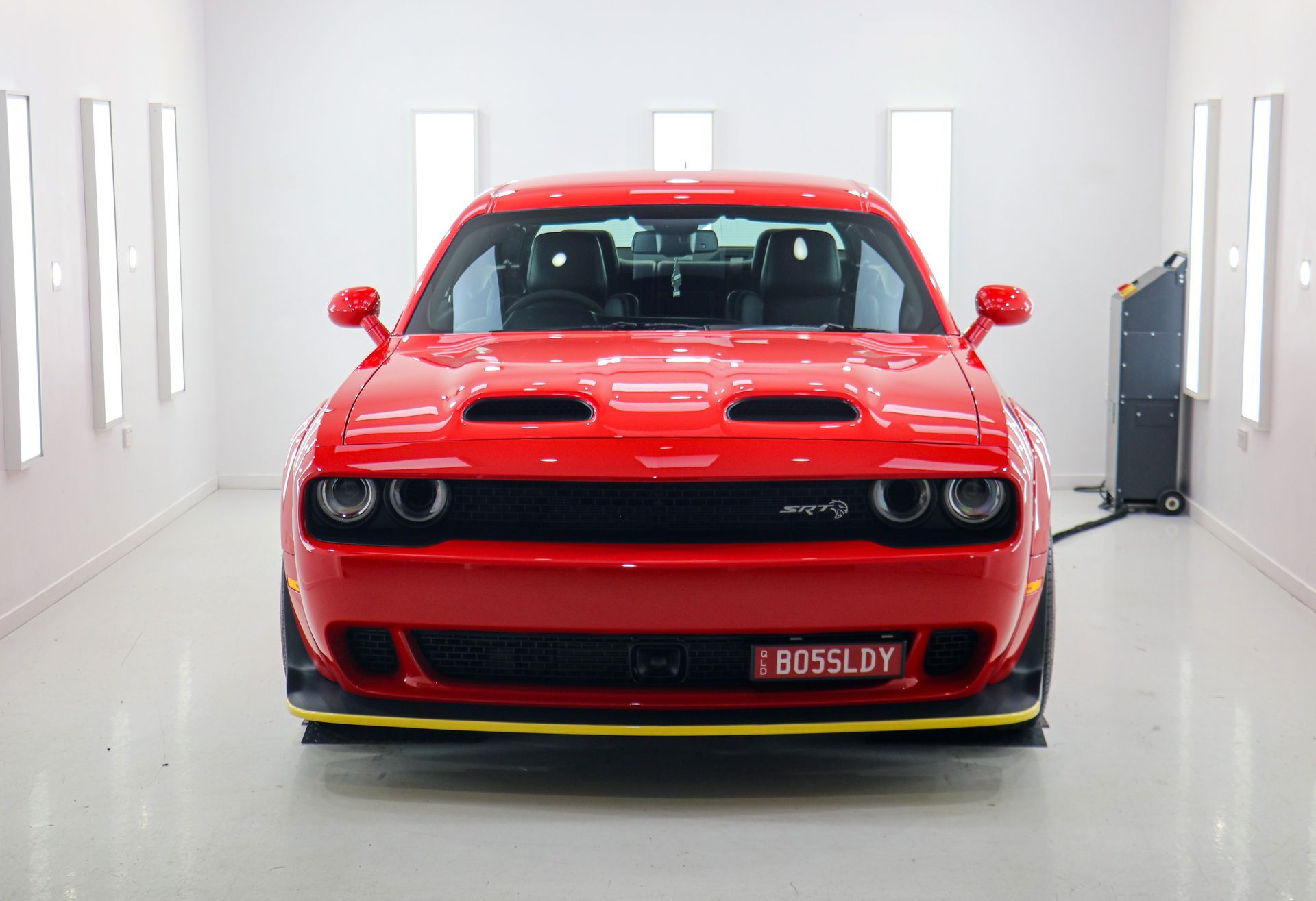
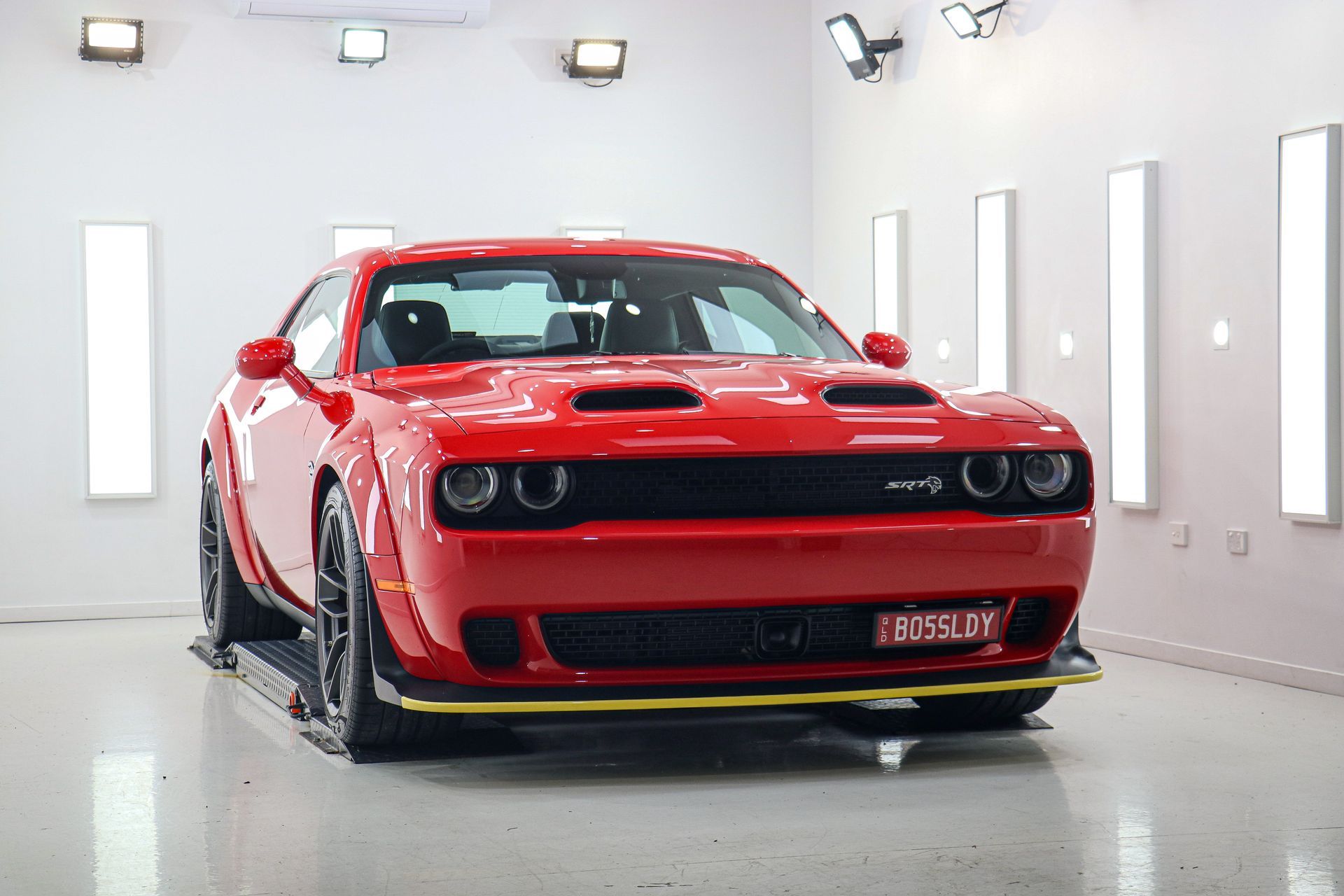
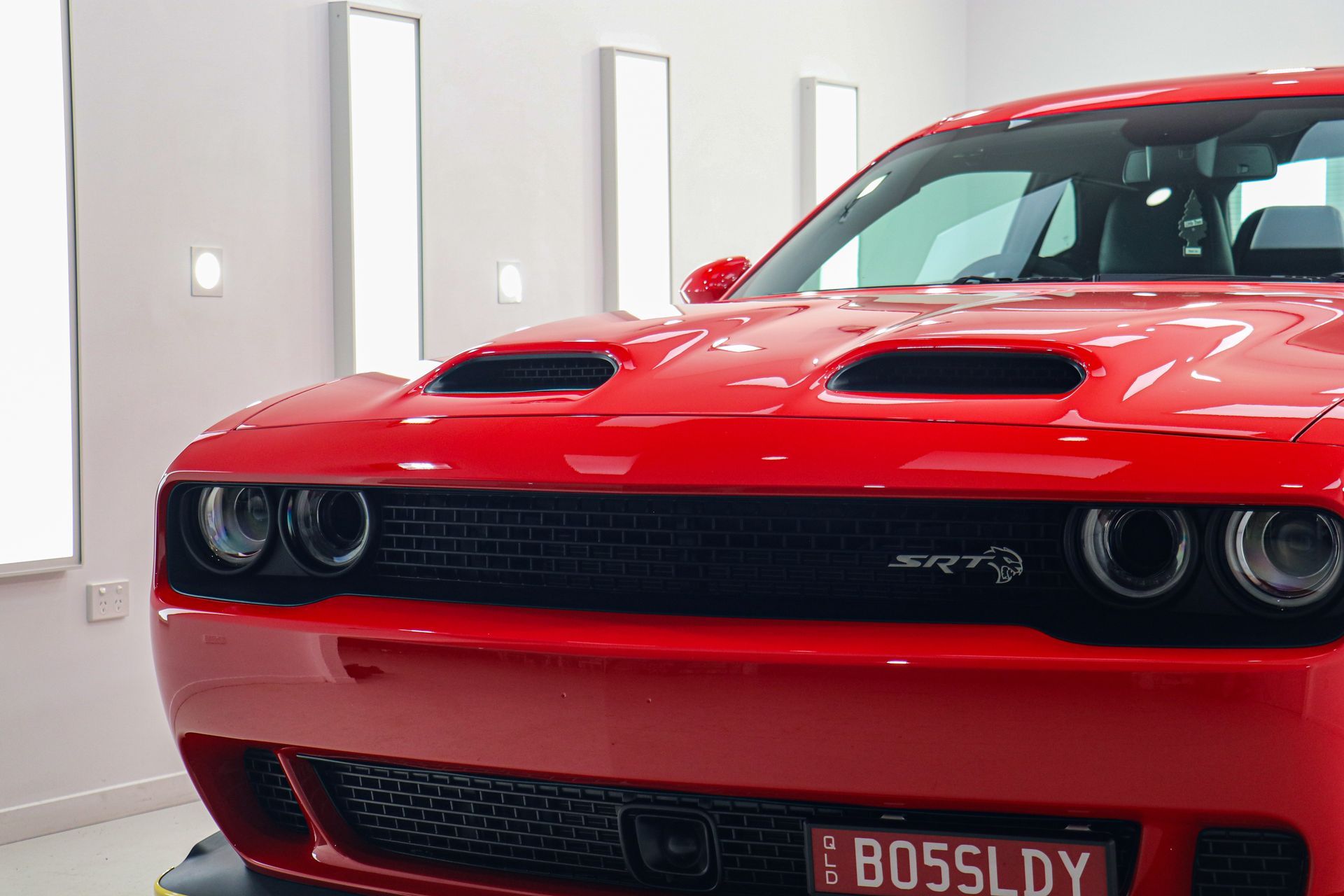
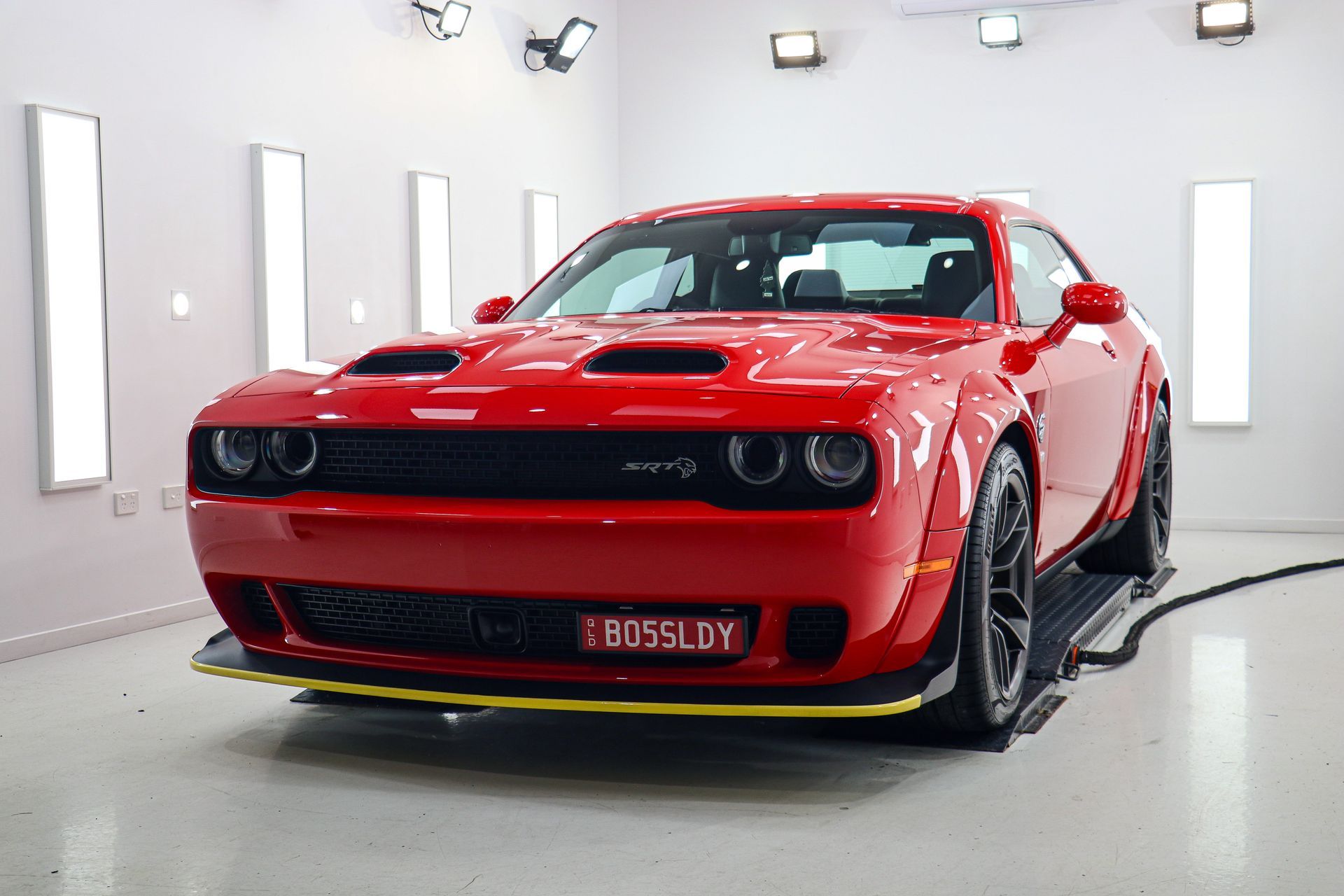
The Last Call Widebody is one of the final chapters of the Hellcat story, and it's a rare sight anywhere in the world. Rare in the States, rarer again here in Australia. Worth upwards of $350,000, this is exactly the kind of car that gets the full treatment in the studio.
The owner wanted complete protection front to back, so I installed Full Body Fusion Paint Protection Film across the entire car, finished with Ethos Graphene Pro Ceramic Coating over the top, along with dedicated coatings for the wheels, interior and glass.
Step 1: Decontamination Wash
Every project starts here. Before any film or coating goes near this Hellcat, it goes through a full decontamination wash to strip back road grime and get the paint completely clean.
I start with the wheels, using a dedicated wheel cleaner and brush set to lift brake dust and grime without touching the paint. From there it's a foam pre wash over the entire body to loosen surface contamination, followed by a full contact wash using the two bucket method to keep the mitt clean and the risk of scratching low.
Once the wash is done, I clay bar the entire vehicle to pull out anything still bonded to the paint. A touchless dry finishes the job and gets the Hellcat ready to move into the PPF bay completely clean.
Step 2: Paint Protection Film
This Hellcat received the Full Body Fusion Paint Protection Film Package, covering every exterior panel. Because this is a widebody kit with extensive factory modifications, off the shelf patterns weren't going to cut it.
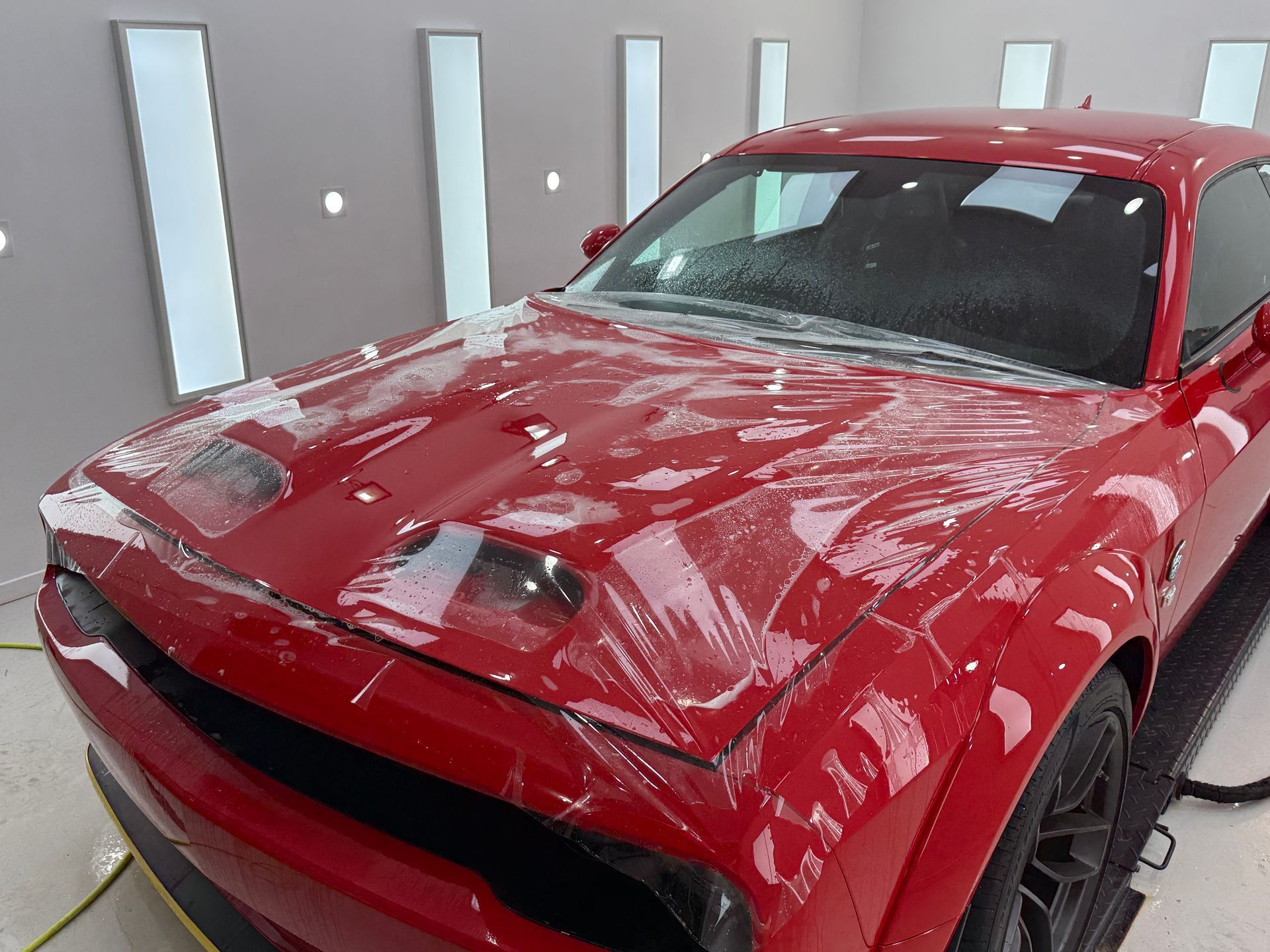
Every panel is mapped out using dedicated PPF cutting software and plotted on a template built specifically for this car, so the film sits precisely within the lines instead of overlapping edges or leaving gaps. Given how much this widebody kit changes from a standard Challenger, I built out a hybrid template with extensive custom modifications to get maximum coverage on every flare, vent and panel while keeping the finish tight and tucked.
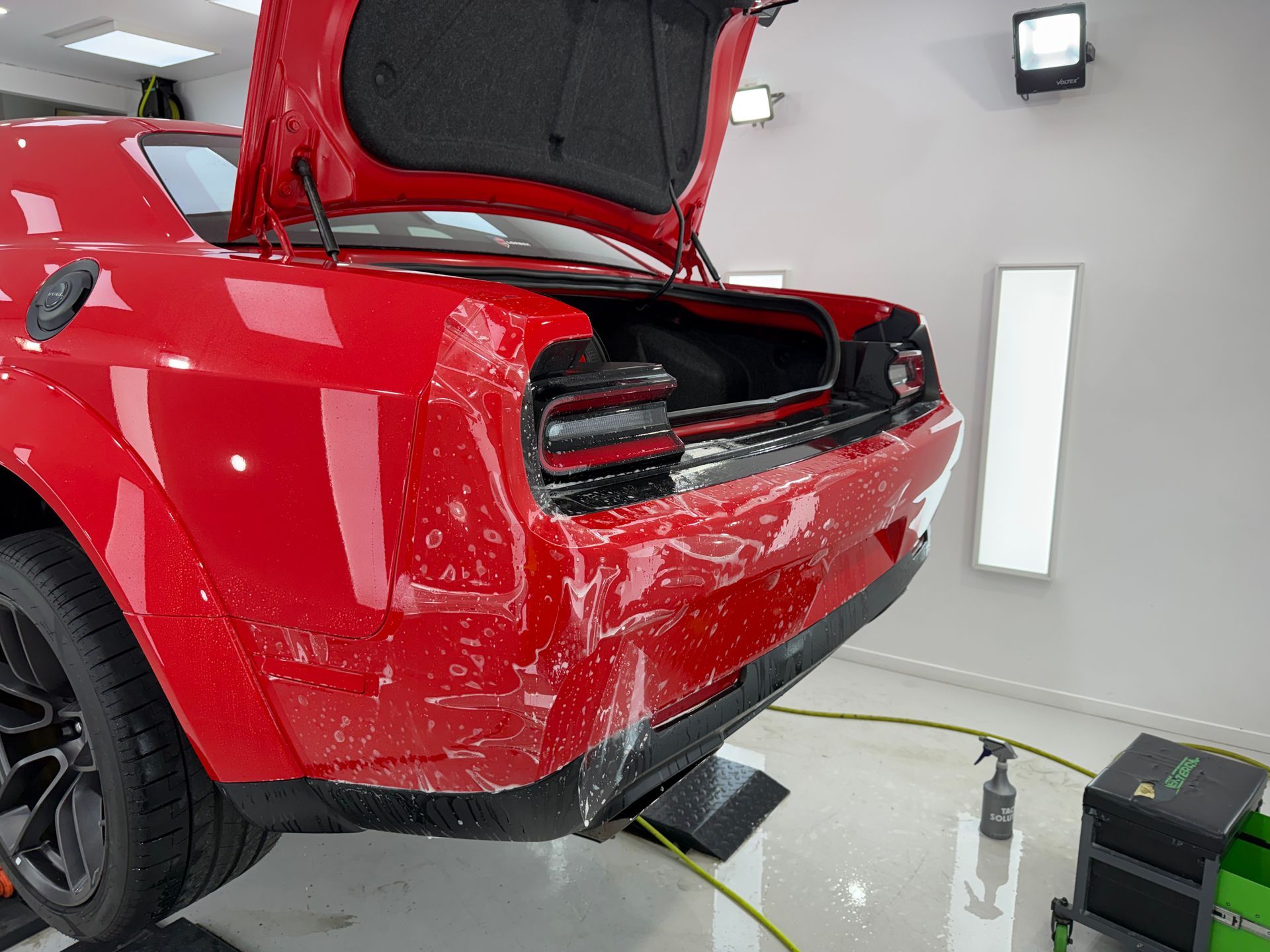
With the film cut and printed, it's installed panel by panel using a slip solution to float it into position before setting anchor points and squeegeeing it down so the adhesive bonds properly to the paint. Once the car is fully wrapped, it goes through various stages of quality control to make sure every edge is finessed but still durable, going back over the whole car to trim and tidy everything up until it's right.
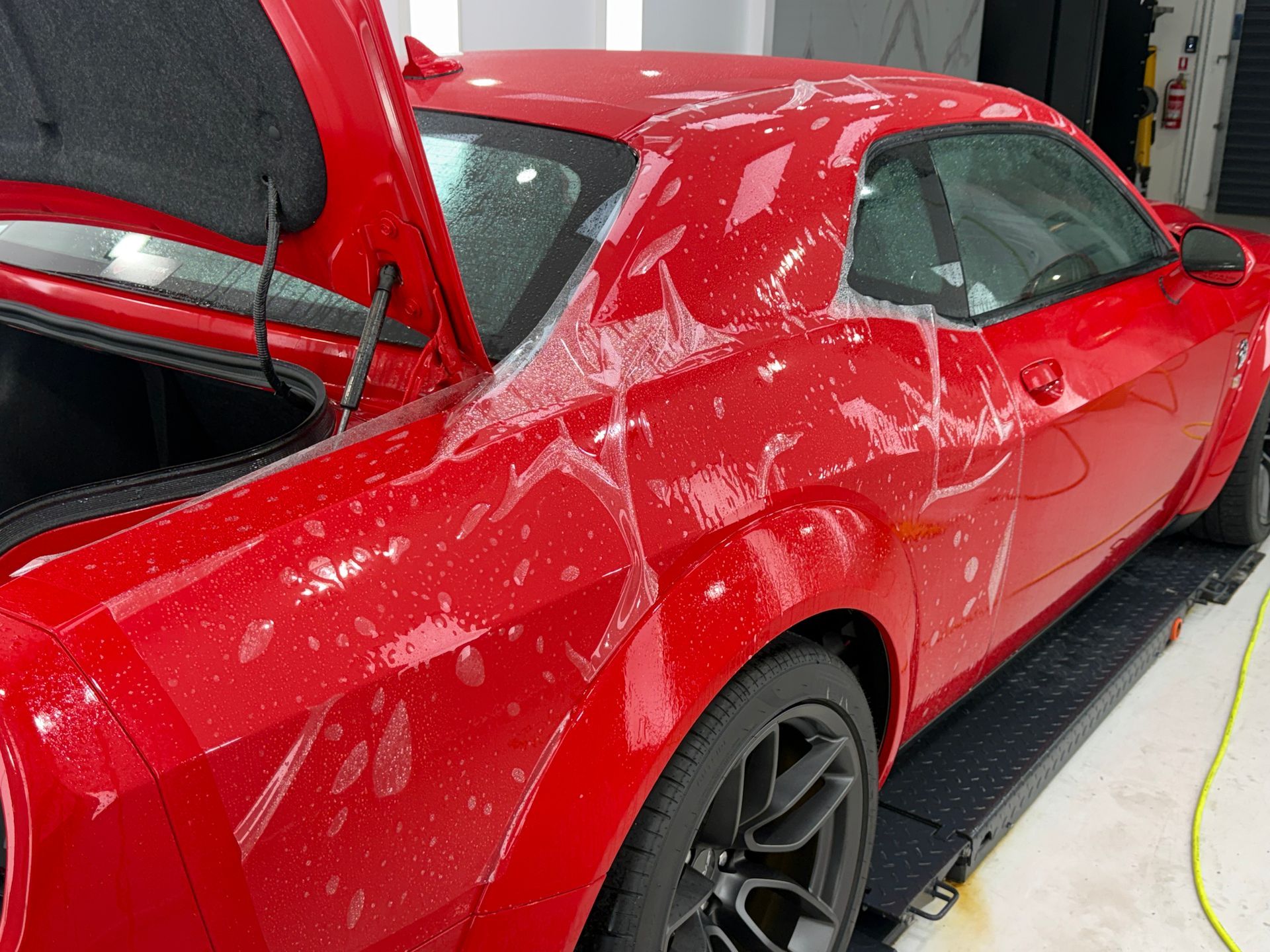
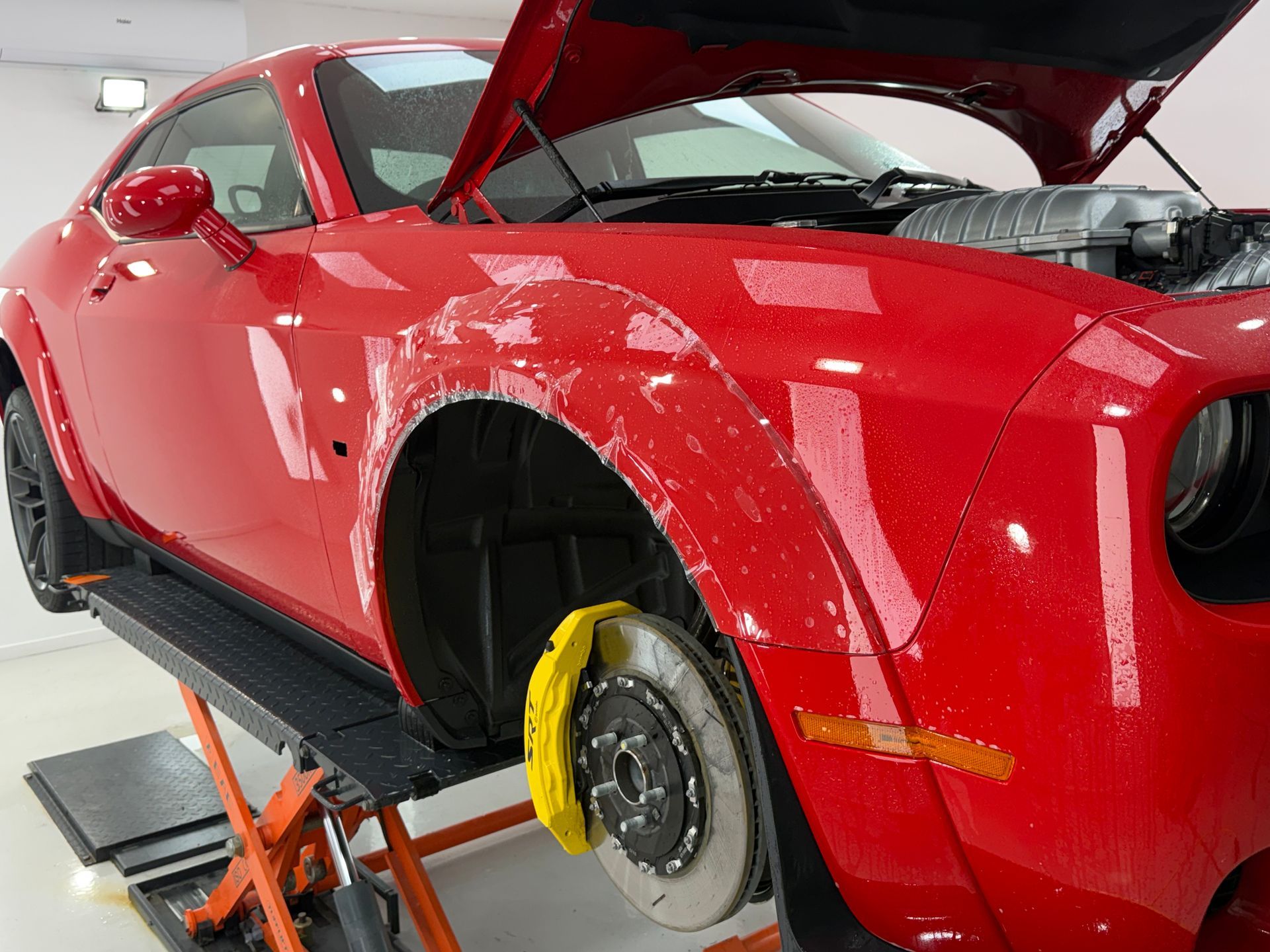
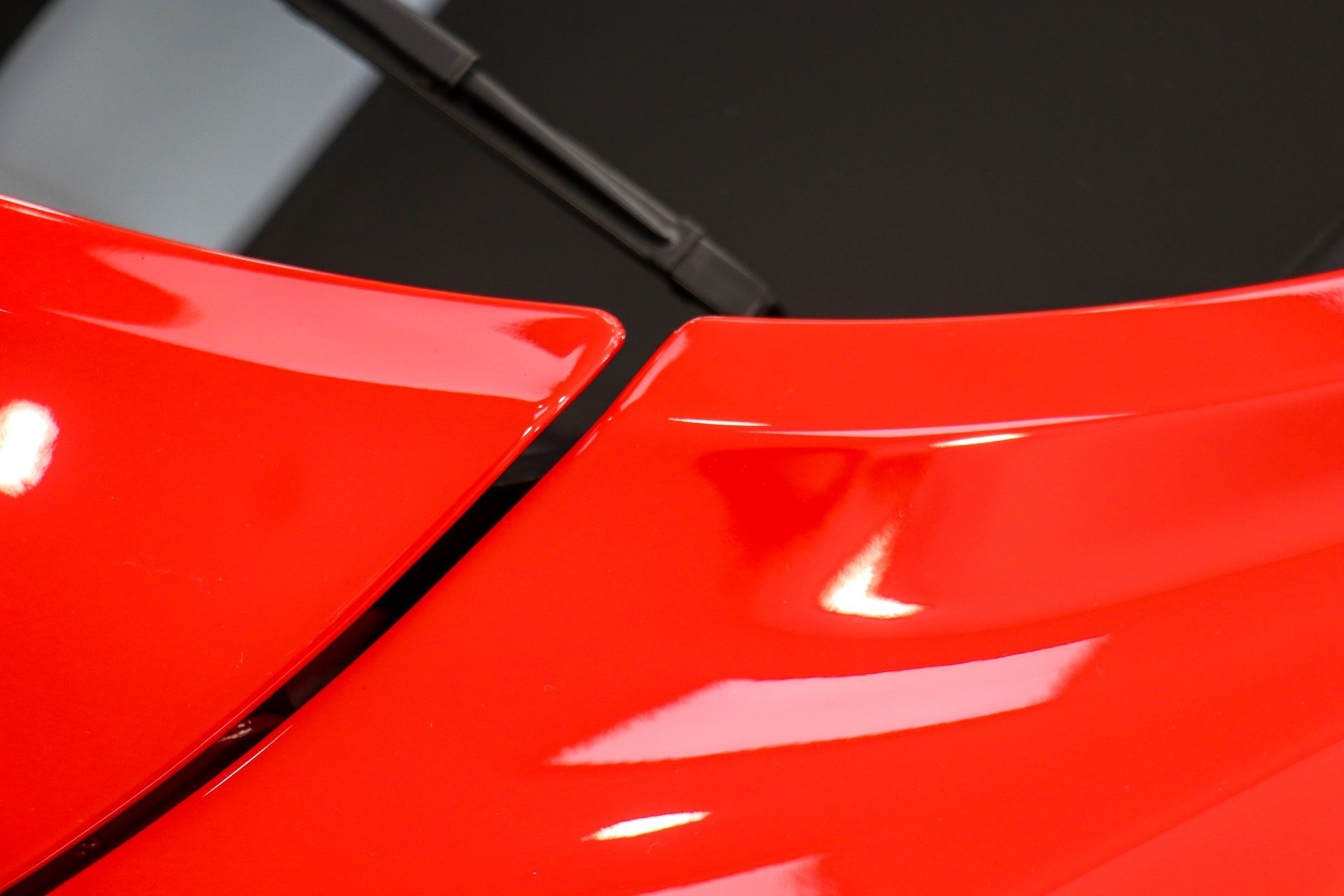
Because this widebody kit has so many bespoke curves, a lot of this install came down to hand fitting rather than just laying a pre cut pattern down and hoping it sits right. On the roof trim and rear spoiler edge, that meant carefully tucking the film into the seam with a squeegee while it was still wet with slip solution, working the edge until it disappeared into the trim line instead of sitting proud of it. For the rear quarters and wheel arches, I pulled the wheels completely off the car so the film could be wrapped properly under the lip and around the arch rather than stopping short at the edge, which is what actually protects against stone chips in the areas that cop the most abuse. Same story around the back: with the boot open, the film gets floated on wet, squeegeed out from the centre to push all the solution and air out from underneath, then wrapped into the bumper and quarter panel returns so there's no visible edge once it's dried down and cured.
Step 3: Ceramic Coating
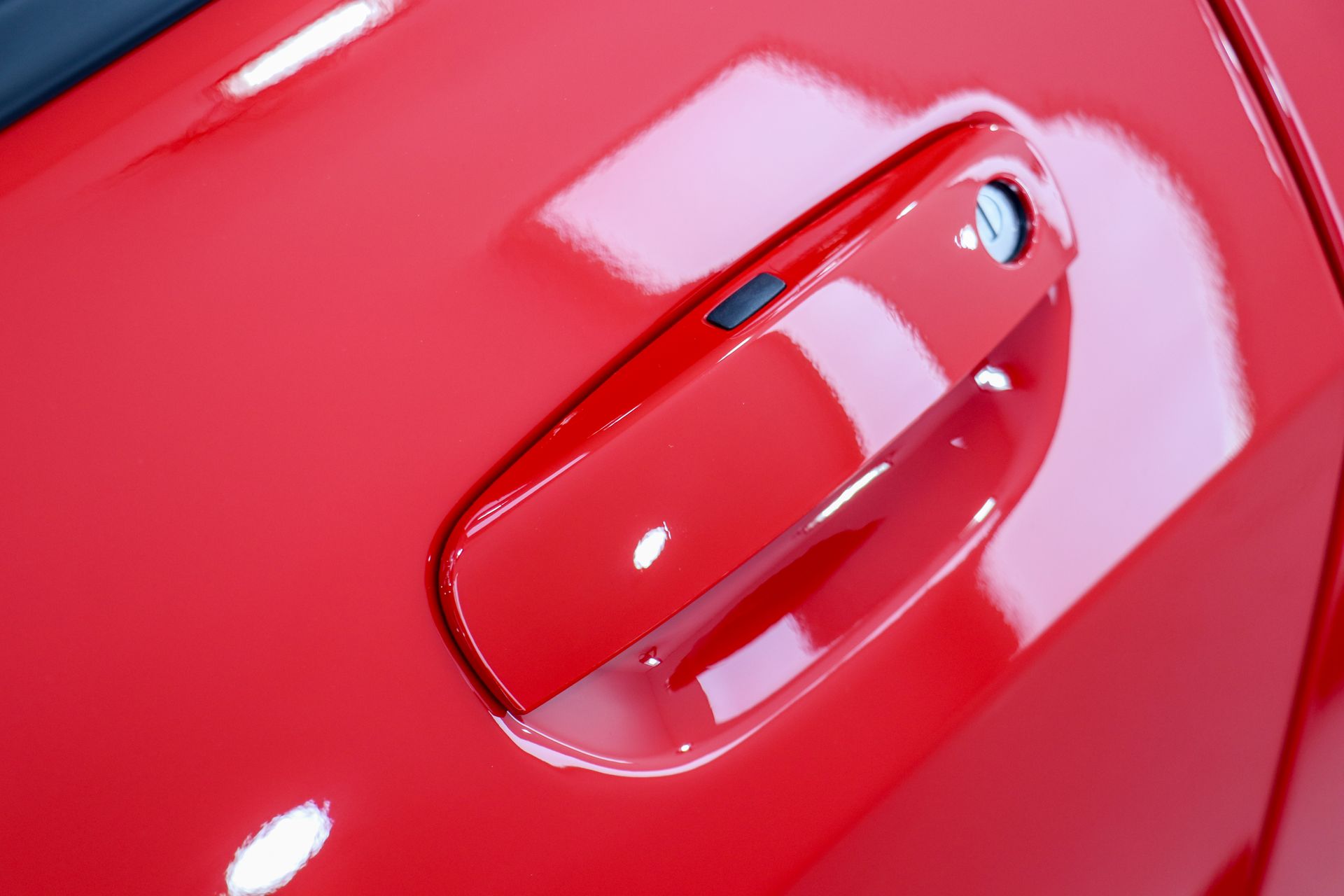
To finish the job, the Fusion PPF was topped with a layer of Ethos Graphene Pro Ceramic Coating, adding extra gloss, hydrophobics and chemical resistance on top of the film. The wheels, interior and glass were each treated with their own dedicated coatings, rounding out full protection across the entire vehicle.
Since the exterior is already covered in PPF, there's no correction needed before coating, just a proper prep to strip any remaining oils or residue so the ceramic has a clean surface to bond to. The coating goes on with an applicator in a cross hatch pattern, then gets levelled off with a microfiber towel, panel by panel, until the whole car is covered.
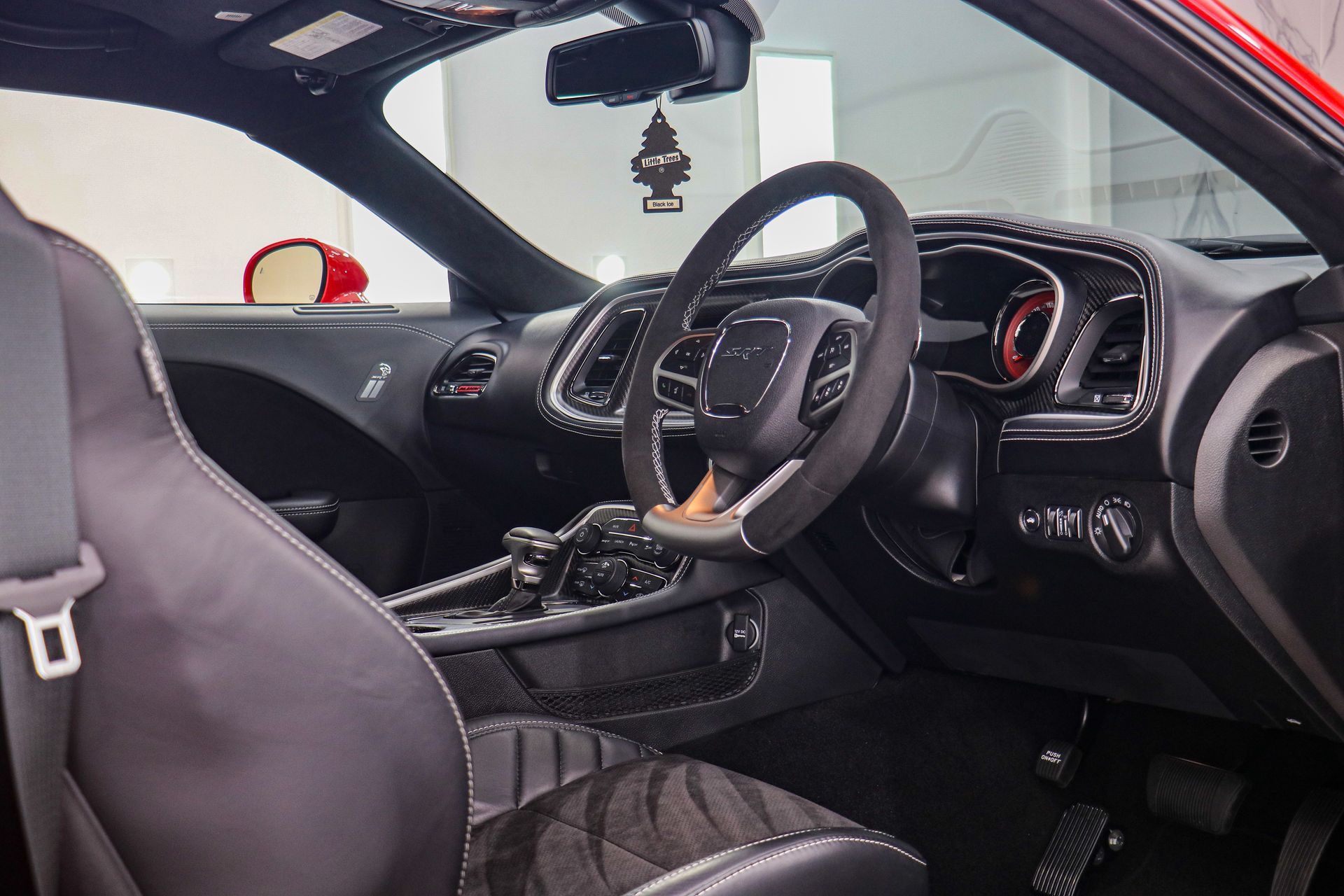
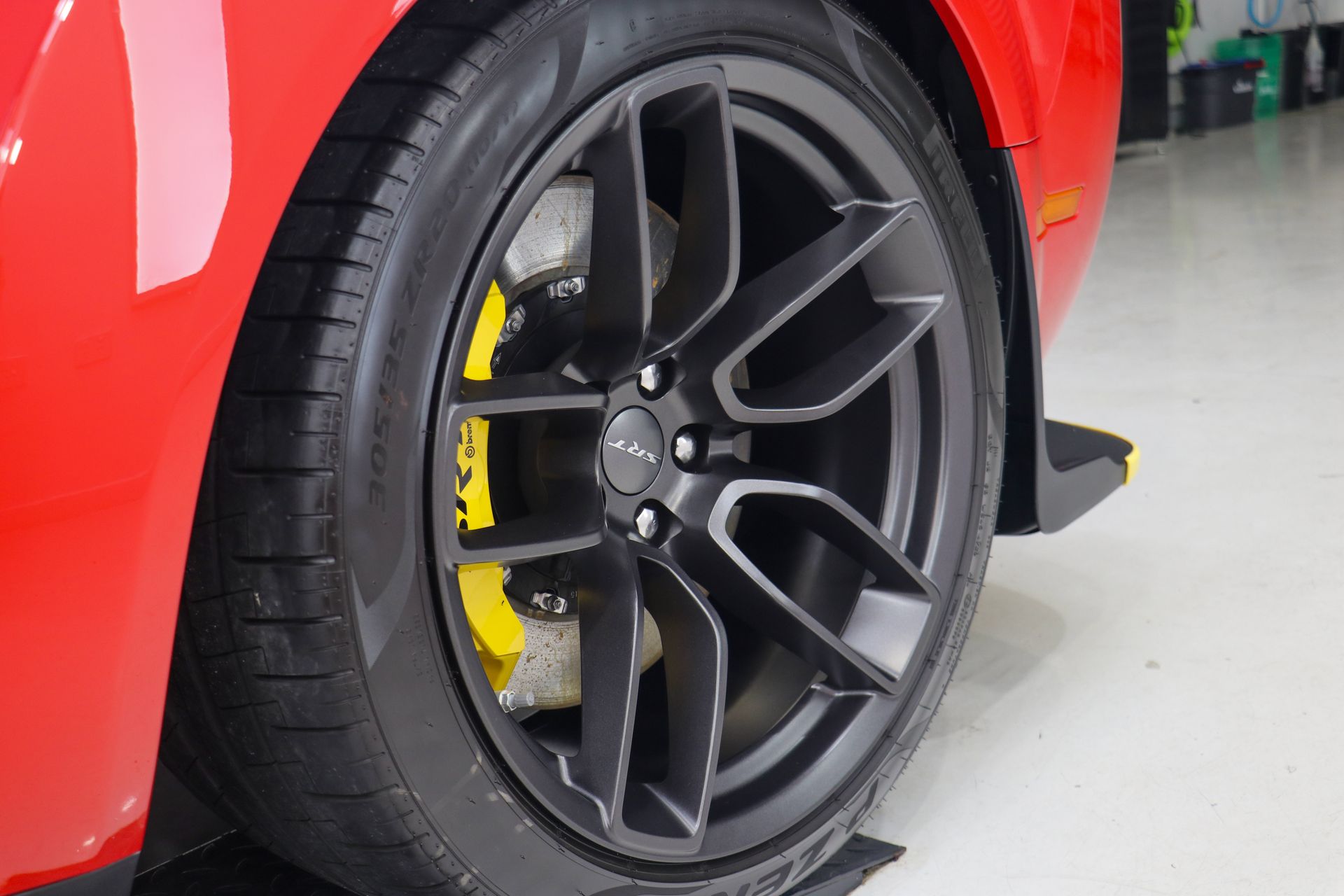
For the interior, that meant a dedicated fabric and leather safe ceramic coating across the seats, dash and trim, protecting against UV fade, spills and everyday wear while keeping that factory fresh finish. The wheels got their own ceramic coating to fight brake dust and heat, and the glass was coated too, so every surface on this car is protected the same way the paint is.
The Final Look
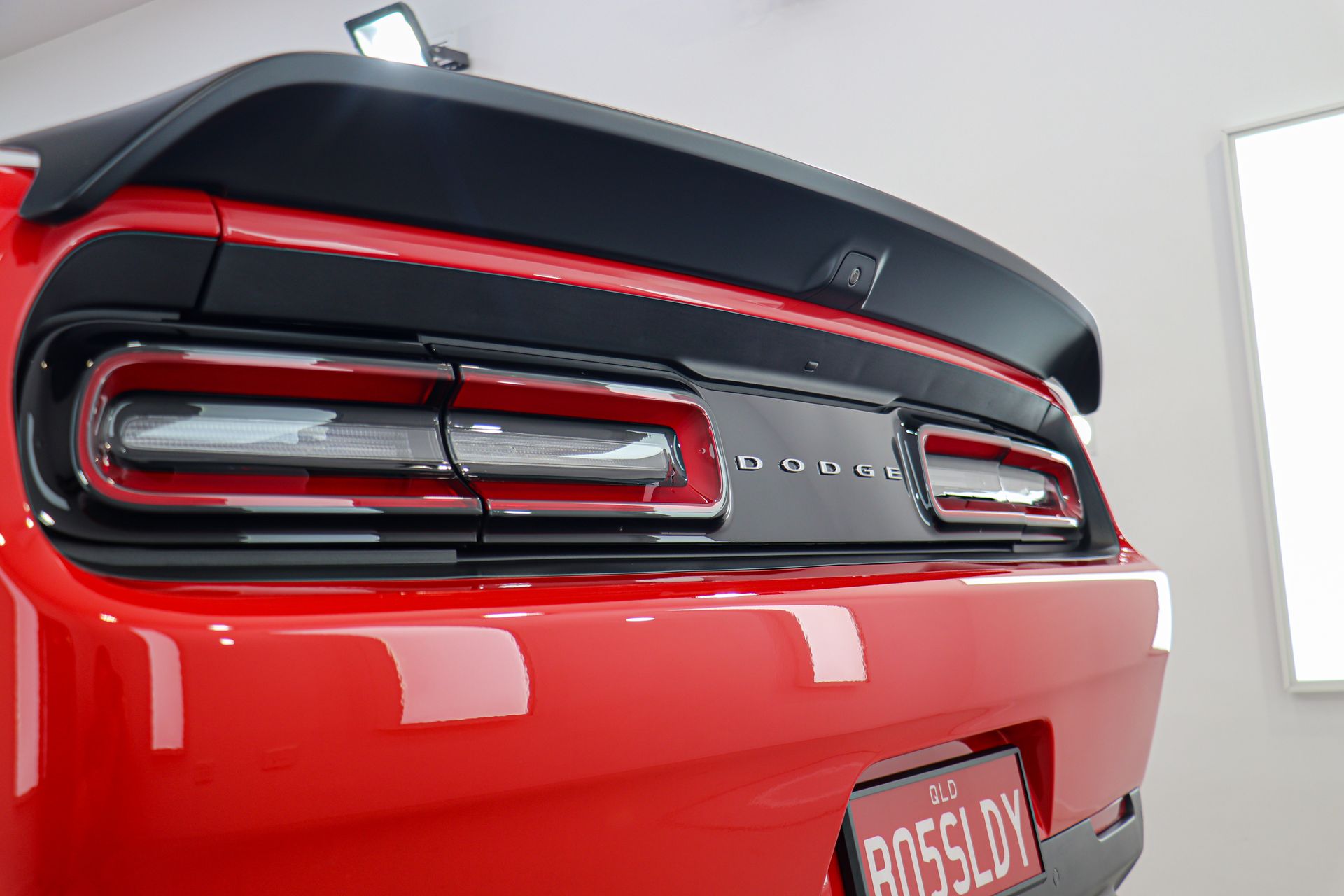
Once the coatings had cured, I gave the Hellcat a full walkaround under studio lighting to check every panel, edge and gap. This is the stage where any hint of streaking, high spots or missed coverage would show up, so I take my time with it before the car ever leaves the bay.
This particular Last Call Widebody is one of the more striking cars I've had through the studio, and it was worth the extra few minutes just to see it finished under proper light.
Once everything cured, I gave the tires a dressing, did a final wipe down and handed the keys back for one of the rarest Hellcats in the country.
Cody
Flash Detailing